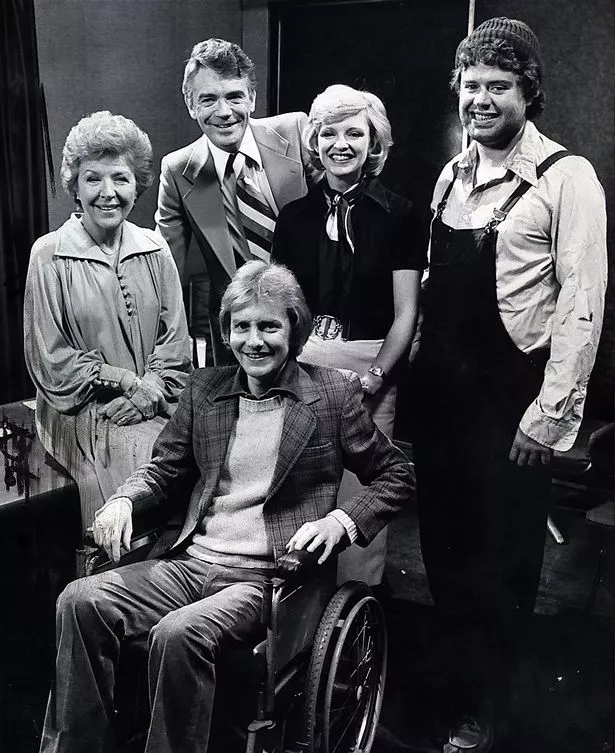
Celebrating 50 Years of Carers Trust Heart of England!
SHARE:
This October we are celebrating 50 years of Carers Trust Heart of England and we would love it if you could join us!
We are celebrating in style and would like to invite you to join us on Friday 11th October at the Windmill Hotel, Coventry, CV5 9AL from 7pm til late - and don't forget your dancing shoes!
To book your seats or table, please click here and fill in the form. We will be in touch to confirm your booking. No booking is valid until it has been confirmed and verified by the Carers Trust Heart of England over email. Tickets are £50 per person or £450 for a table of 10.
So you all know what we do, but did you that Carers Trust Heart of England's origins can be traced back to a storyline on a much-loved ATV (ITV) soap opera?
Back in the 1970s, the hit TV show Crossroads centred on the Crossroads Motel and starred Noele Gordon, recently portrayed by Helena Bonham Carter in ITV drama Nolly, as the motel owner Meg.
In 1973, the show saw Meg’s son Sandy, played by Roger Tonge, left paralysed after a car crash. Meg’s life was turned upside down when she had to stay at home to care for him and she eventually set up a fictional “Caring for Carers” scheme which led to a stream of mail from viewers asking about it.
The storyline prompted Noel Crane, a disabled man from Rugby who was being cared for at home by his mother, to write to the programme makers. He complimented them on the realistic portrayal of the needs of disabled people and those caring unpaid for them.
ATV took him on as an adviser on disability issues and then donated £10,000 to set up a pilot project in Rugby that aimed to provide unpaid family carers with practical support.
The resulting charity, Crossroads Care, supported 26 families in Coventry and Warwickshire and its success led to the creation of many more Crossroads Care schemes. By 2012 Crossroads Care had expanded and was supporting more than 43,000 carers and their families through its network of schemes.
In 2012, Crossroads Care merged with The Princess Royal Trust for Carers – founded on the initiative of Her Royal Highness The Princess Royal in 1991 - to form Carers Trust. Carers Trust now works with a network of over 120 local carer organisations across the UK, supporting close to one million people.
We are incredibly proud to have played such an integral role in the formation of what is now a nationwide Carers Trust Network, so join us as we celebrate a historic anniversary!
Brief history of the Princess Royal Trust for Carers
The Princess Royal Trust for Carers was founded in 1991 on the initiative of Her Royal Highness The Princess Royal, as the successor of the George Square Trust. At that time, people caring for others were scarcely recognised as a group requiring support.
The Carers National Association, which had just been formed at that time through the merger of the Association of Carers and the National Council for Carers of the Elderly, was beginning to give carers a voice, but there was little or nothing in the way of services or support other than respite.
However, Community Care reforms (validated through legislation in 1993), were ensuring that more and more care would be delivered not by paid and trained workers, but by family members and friends – those whom we now call carers.
The Princess Royal Trust for Carers acknowledged that all carers require information, support and recognition of their individual needs and, consequently, meeting these needs became the focus. In its first years, The Princess Royal Trust for Carers developed a model of service provision throughout the UK, through charitable fundraising at a UK-wide level, and by financial support from local statutory sources.
The Princess Royal Trust for Carers funded a growing network of The Princess Royal Trust Carers’ Centres.
Funded for three years (one third by The Princess Royal Trust for Carers and two thirds by local statutory services who undertook to take over The Princess Royal Trust for Carers’ funding at the end of the three year period), Carers’ Centres were able to respond to the needs of carers.
Most of these Carers’ Centres were established as independent charities, although some were run by managing agents such as local Councils for Voluntary Services or the Red Cross. The management committee of each Carers’ Centre was comprised mainly of carers, although the manager and staff were largely professional care workers.
A small group of carers come together in about 1985 to ensure support for other carers, initially under the wing of Coventry Voluntary Services Council then as an independent charity
Coventry Carers’ Centre was an independent charity affiliated to but not run by Princess Royal Trust for Carers
Princess Anne came to Coventry for the official opening of the Carers’ Centre in the City Arcade, in what was a huge event for the whole city
The services provided where ahead of their time in that they aimed to improve carers’ lives by enabling/empowering them to carry on caring for as long as they chose to do so
Keep up to date with all the latest news, and campaigns!